Pink Ribbon launches the “Stronger Together” campaign
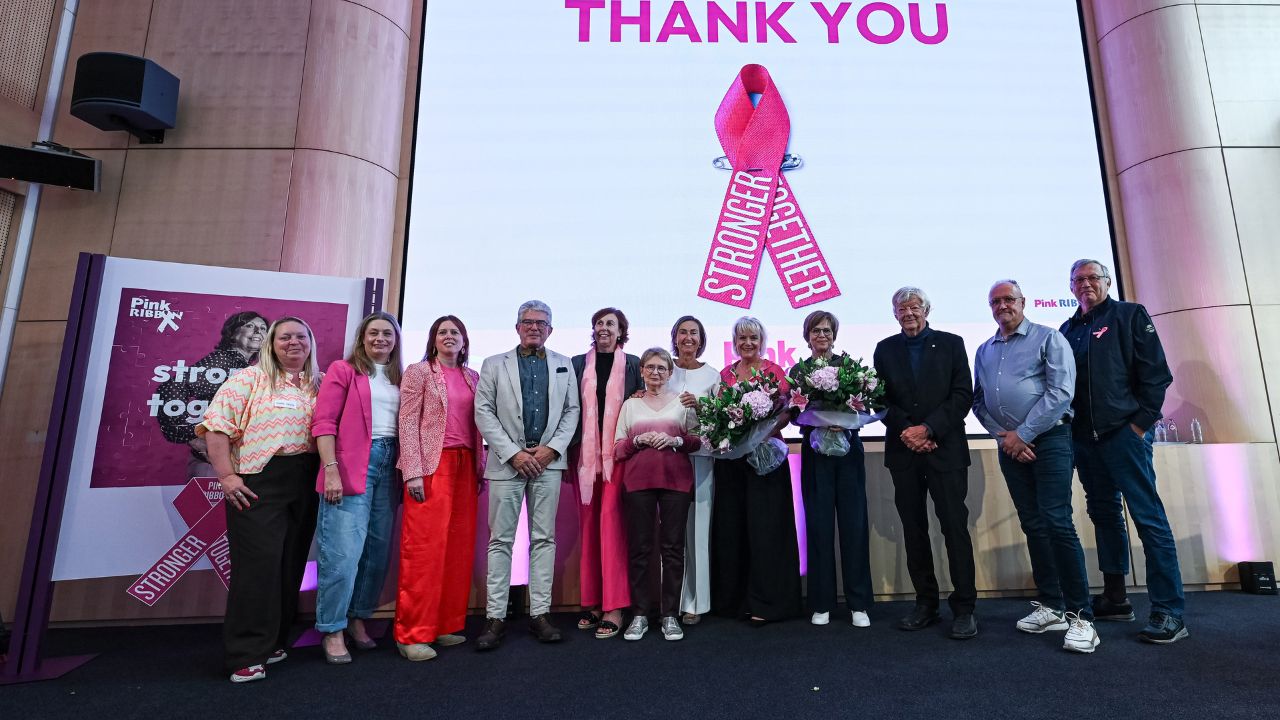
“Ignorance is harmful to your health”
In Belgium, 1 in 8 women and 1 in 1,000 men will be diagnosed with breast cancer at some point in their lives. However, the vast majority of our fellow citizens believe they are at low risk because the disease does not run in their family and there is no genetic predisposition.
Furthermore, half of Belgian women are not sufficiently familiar with the 9 warning signs of breast cancer. And there are all sorts of myths and misconceptions that lead to unnecessary fear. As a result, visits to the doctor are postponed and breast cancer screenings are avoided. As a result, breast cancer is often detected later, the impact on the patient is much greater than necessary, and survival rates decrease. Ignorance about breast cancer causes a dangerous domino effect.
Raising awareness of breast cancer and further reducing ignorance about this disease is the primary goal of the “ Pink Ribbon ” 2026 campaign, launched in conjunction with International Breast Cancer Awareness Month.
In this regard, “ Pink Ribbon ” is not only taking various initiatives on its own, but we are also making a two-part request to the government and all stakeholders in our country to ensure that:
- everyone in our country with breast cancer—as well as all their close family members—is given the opportunity to be tested for high-risk breast cancer genes. Because today, tens of thousands of carriers remain in the dark for the time being.
It is estimated that half of the carriers do not know they carry a hereditary breast cancer gene.
- The 9 warning signs of breast cancer should become part of a systematic action plan aimed at raising breast cancer awareness and combating misinformation. Because today, a lack of knowledge directly contributes to breast cancer mortality.
Lack of Awareness About Hereditary Breast Cancer
The vast majority of our female compatriots believe they are at low risk because there is no history of breast cancer in their families.
However, 0.3% to 0.5% of the Belgian population carries the BRCA1 and BRCA2 breast cancer genes. In our country, an estimated 33,000 to 55,000 people are carriers of one of these two genes, and at least half of them are simply unaware of it. These genes increase the risk of breast cancer in women by 60 to 80 percent. They cause immeasurable suffering, often in women at a young age. Carriers of hereditary breast cancer genes are also at greater risk for other cancers (including ovarian and prostate cancer), and they can pass these genes on to their children.
In a survey commissioned by Pink Ribbon and conducted by Ivox in 2025 (1) among 1,000 Belgians, respondents were asked about their knowledge of hereditary breast cancer and their willingness to undergo testing for breast cancer genes before developing cancer. The survey revealed that 60% have only limited knowledge of the subject and would like to learn more about it. Furthermore, 80% want to be tested because it would allow for preventive measures (such as starting intensive monitoring or undergoing preventive surgery).
Because many carriers are still not sufficiently informed, Pink Ribbon aims to significantly raise awareness about hereditary breast cancer. During “Hereditary Cancer Week” (September 28 through October 4) its new video campaign “Het zit in de familie.be,” in which we ask the general public, the government, and all other stakeholders in our country to share this video as widely as possible… Because everyone has the right to know.
There is also a genetic screening test, but it is not available to everyone in Belgium. That is why Pink Ribbon is reiterating its call to the Belgian government to ensure that everyone in our country with breast cancer—and all their loved ones—has the opportunity to be tested for the high-risk breast cancer genes, BRCA1 and BRCA2. Pink Ribbon To this end, will invite all stakeholders in the field of hereditary cancer to afirst roundtable discussion on “genetic testing” on February 4, 2027—the next World Cancer Day.
Lack of knowledge regarding other types of breast cancer
Hereditary breast cancer accounts for only 5 to 10% of all breast cancer diagnoses. So what about the remaining 90 to 95% of breast cancer cases?
Misconceptions & Myths
A recent survey (summer 2026) on breast cancer awareness among 1,200 women in Belgium, conducted by Ivox on behalf of Novartis and Pink Ribbon —a partner (2)—shows that only 4 out of 10 women are familiar with the symptoms of breast cancer. As many as 7 out of 10 cite family history or genetic factors as the most important risk factor. That is the biggest misconception. After all, more than 8 out of 10 breast cancer cases affect women who have no first-degree relatives with breast cancer (3)
In addition, this iVox survey (2) debunked several other myths:
- For example, 18% of those surveyed believe they can protect themselves against breast cancer by not using deodorant. Myth;
- For that reason, 10% don't wear underwire bras either. Fiction;
- And 22% view stress as one of the most important risk factors for breast cancer. However, stress is not a documented risk factor for breast cancer.
Moreover, among women of non-Belgian origin, such attitudes are even more prevalent, and the figures are even higher.
Lack of knowledge about the 9 warning signs
About half of all breast cancers are detected by the patient herself. That’s why it’s important to know your own breasts and to examine and check them regularly. That way, you’ll notice right away if anything changes. Changes in your breasts may be harmless, but they can also indicate breast cancer. That’s why it’s important to discuss any changes with your doctor as soon as possible. Because, again, the earlier breast cancer is detected, the better it can be treated.
In 2022, a survey by Pink Ribbon (4) assessed the Belgian population’s awareness of the warning signs of breast cancer. After all, a lump in the breast is not the only warning sign of breast cancer. Pink Ribbon identifies nine: in addition to a lump, there are eight others—a lump on the breast or under the armpit, a dimple in the breast, an inverted nipple, as well as nipple discharge, breast deformation, uneven skin or flaking, and redness of the breast. This survey showed that lumps in and on the breast and under the armpit are better known among the general population, but that half or more of the women surveyed were unaware of all the other warning signs. However, research shows that 1 in 6 breast cancers do not present as a lump but through another warning sign. These other, less well-known symptoms, however, lead 1 in 5 women to delay seeing a doctor for more than 3 months (5).
Lack of awareness about less common warning signs leads to procrastination and a higher risk of a delayed diagnosis. In 2022, this research led to the development of Mammoquiz.be at Pink Ribbon , which provides women with insight into the warning signs of breast cancer in a nearly game-like way. Mammoquiz.be is now available for free in 8 languages: Dutch, French, English, German, Spanish, Polish, Turkish, and Standard Arabic. To date, the platform has been visited more than 125,929 times, and 29,274 surveys have been completed in full. Each quiz participant receives a personalized profile regarding her risk of detecting breast cancer at a later stage than necessary, a risk score out of 10, and personalized advice on how to reduce her risk of late detection. Nearly 30% of participants are at moderate to high risk of detecting breast cancer later than necessary.
Pink Ribbon In the coming years, it will work to further raise awareness of Mammoquiz.be and encourage participation among the general public—specifically among all women in Belgium, regardless of their background. We urge the government and all other stakeholders to support the nonprofit organization in this broad outreach effort by all means possible.
Low Participation in Breast Cancer Screening
A lack of awareness and knowledge generally leads to low participation rates in cancer screening, whether for cervical cancer, colorectal cancer, or breast cancer. The goal of screening is to detect cancer at an early stage, which results in less intensive treatment regimens and improved survival rates. Adequate knowledge about breast cancer nearly doubles (x 1.73) the likelihood of participating in breast cancer screening, according to a systematic review (6).
According to the Ivox survey commissioned by Novartis and Pink Ribbon (1), more than one in three of the women surveyed in the 50–69 age group (which is, after all, the target group) are not familiar with—or are only slightly familiar with—breast cancer screening, or do not know exactly who the screening is intended for. This lack of awareness is significantly higher among women of non-Belgian origin (62.9%) and in the Brussels-Capital Region (62.6%).
Participation in the breast cancer screening program remains low in Flanders, at 64.7%. In the Brussels-Capital Region and Wallonia, the participation rate is even lower, because many people get screened outside of the program.
A recent study by Ivox (4) confirms that half of the women who do not respond to the invitation do so because they prefer to be screened on their own initiative, outside the population-based screening program. Other reasons for non-participation include “it’s too painful,” “the radiation can cause breast cancer,” “a lack of trust in the government,” and “the risk of overdiagnosis.” The disadvantages of non-participation are that it increases the risk of breast cancer being detected at a later stage. A late diagnosis usually requires more intensive treatment and reduces the chances of survival.
Pink Ribbon “Stronger Together” Campaign
Raising awareness about breast cancer and further reducing ignorance about this disease is therefore crucial and the primary objective of the “ Pink Ribbon ” 2026 campaign, held in conjunction with International Breast Cancer Awareness Month.
The national breast cancer organization will continue to use its website www.pink-ribbon.be —which was redesigned last year (and has generated 124,891 page views over the past 12 months)—its newsletters (sent to a mailing list that now includes 128,620 recipients), and its social media channels (reaching 3,251.183 people over the past year) to continue providing information about breast cancer in a clear and nuanced way, to distinguish facts from misconceptions, and to dispel ignorance about breast cancer.
That is precisely why Pink Ribbon is launching its “Stronger Together” campaign alongside the unveiling of its12th “ Pink Ribbon ” ribbon. It is a campaign that, now more than ever, will focus on authenticity and solidarity. After all, together we can cope with the disease much better. We can ensure that breast cancer is detected even faster and treated much more effectively.
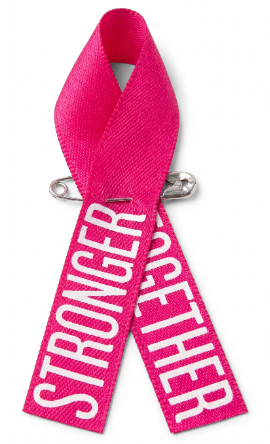

The " Pink Ribbon" ribbon costs €4 (including VAT) and is available at bpost (at any post office in Belgium), at Carrefour, and at Medi-Market, AVA, and MS Mode stores. In addition, there is once again a matching bracelet available for €9 (including VAT).
Launch of borstkanker-meldpunt.be
But all of that isn't enough.
This lack of awareness shows that more is needed than a one-time campaign. That is why Pink Ribbon is calling on the government and all other stakeholders—including the education sector, the media, healthcare providers, and patients themselves—to make the 9 warning signs of breast cancer part of a joint, structured action plan aimed at raising breast cancer awareness among the general public and combating misinformation about breast cancer.
Pink Ribbon To that end, it is launching a new initiative called borstkanker-meldpunt.be.
What exactly does this mean?
Dozens of dedicated patients, who are already ambassadors for Pink Ribbon, will now serve as liaisons to gather questions and misinformation about breast cancer. They will continuously monitor the situation. Through them, Pink Ribbon collects informative questions, misconceptions, and myths on its “breast cancer” reporting platform at meldpunt.be and seeks the correct answers from the appropriate stakeholders in breast clinics, screening programs, health insurance funds, oncology dietitians, etc. Pink Ribbon We will record these answers and present them in accessible texts, which will then be shared through the nonprofit’s own media channels, as well as through those of all relevant stakeholders we can involve in this effort, so that we can disseminate expert information as widely as possible.
Pink Ribbon will launch Borstkanker-meldpunt.be on International Breast Cancer Day, October 19.
Press
Dr. Marleen Finoulst (Editor-in-Chief of Pink Ribbon) and Prof. Dr. Em. Jan Lamote (breast surgeon, former head of the Breast Clinic at UZ Brussels and chair of the Board of Directors of the nonprofit organization Pink Ribbon) are available to provide further clarification.
Sources
(1) iVox survey on awareness of hereditary breast cancer and willingness to undergo genetic testing, conducted by Pink Ribbon among 1,000 Belgians. Summer 2025.
(2) iVox survey on awareness of breast cancer commissioned by Novartis, in collaboration with Pink Ribbon , among 1,200 women in Belgium. Summer 2026.
(3) Familial breast cancer: collaborative reanalysis of individual data from 52 epidemiological studies including 58,209 women with breast cancer and 101,986 women without the disease. Lancet. 2001;358(9291):1389-99.
(4) iVox survey on awareness of the 9 warning signs, commissioned by Pink Ribbon among 1,000 women in Belgium. Summer 2022.
(5) Koo MM, von Wagner C, Abel GA et al. Typical and atypical presenting symptoms of breast cancer and their associations with diagnostic intervals: Evidence from a national audit of cancer diagnosis. Cancer Epidemiol. June 2017;48:140–146.
(6) Baccolini V, Isonne C, Salerno C et al. The association between adherence to cancer screening programs and health literacy: A systematic review and meta-analysis. Prev Med 2022;155:106927.)
Continue reading
.png)
Ilse, Breast Cancer Patient Expert Candidate: “I don’t want a boring life”

Pink Ribbon : "Far too little attention is paid to the group of patients with the most severe diagnoses"


.png)
.png)








.png)