Interview with Aimé Van Hecke: "The pink illumination of the European Parliament made me proud."
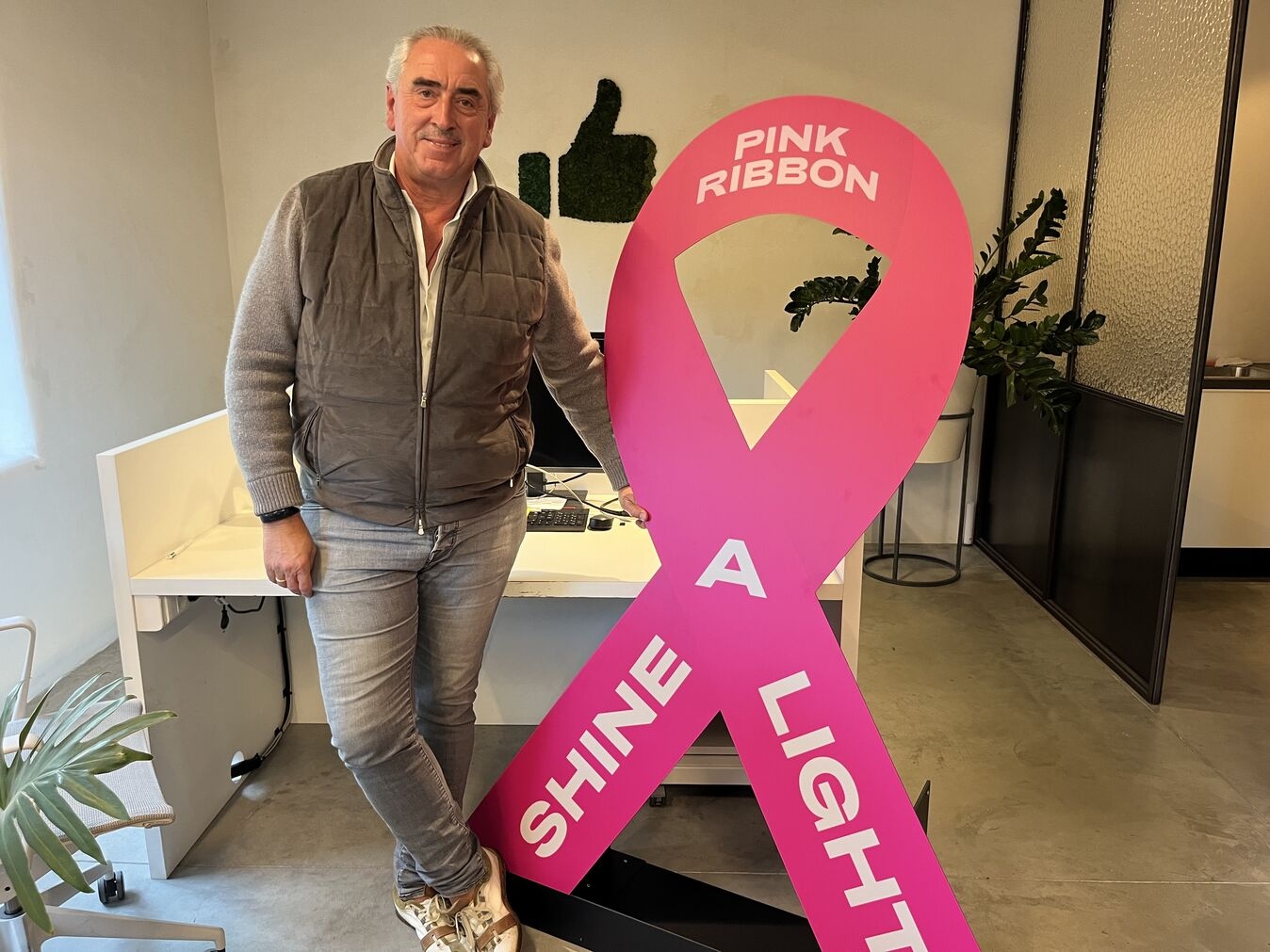
You have built a career in the media. How did that happen?
Aimé Van Hecke: "I do indeed have a long career in marketing and media behind me. The common thread throughout my career has been tailoring products or services to the needs and wishes of users, and communicating this to them in a targeted manner.
I started my career in consumer research before working for media companies such as Mediahuis, where I was publisher of Het Nieuwsblad, VRT, where I became general manager of television, and Sanoma.
How did you Pink Ribbon at Pink Ribbon ?
Aimé Van Hecke: As CEO of Sanoma, then publisher of various women's magazines, I brought Pink Ribbon to Belgium Pink Ribbon twenty years ago. After Sanoma left our country, my partner Bettina and I set up our own marketing communications agency, which Pink Ribbon working for Pink Ribbon in 2015.
What are your responsibilities at Pink Ribbon?
Aimé Van Hecke: I am responsible for the strategic development of Pink Ribbon and am heavily involved in establishing partnerships between Pink Ribbon companies or other organizations that want to support our fight against breast cancer.
Thanks to you, the non-profit organization has numerous interesting partnerships. How do you explain that success?
Aimé Van Hecke: Breast cancer is the most common cancer among women. One in eight women is affected. That means that everyone knows someone who has been touched by the disease. Companies—which often employ many women or have many women among their clientele—are also confronted with these harsh realities.
More and more organizations feel compelled to join forces with Pink Ribbon to raise awareness of Pink Ribbon , increase awareness of the risks, encourage preventive behavior, improve patient care, and support breast cancer-related research. In addition, more and more companies consider it an important part of their CSR to take social responsibility.
What do you expect from these partners? What is the goal?
Aimé Van Hecke: We expect them to provide financial support to realize the Pink Ribbon, to use their media and communication channels to raise breast cancer awareness, and to actively collaborate, for example by participating as a company with their employees in our various projects.
What do you think is the role of Pink Ribbon ?
Aimé Van Hecke: To contribute as much as possible to the goals of everyone who wants to fight breast cancer. That means reducing the number of diagnoses, ensuring early detection, and improving the quality of life of patients. We want to ensure that fewer and fewer people in Belgium die from breast cancer and that those who do experience the disease can live longer and better lives. In other words, we want to significantly reduce the social costs associated with breast cancer.
Do you have any anecdotes about Pink Ribbon you can share?
Aimé Van Hecke: There are so many wonderful anecdotes from the past twenty years. One of the most recent achievements I am proud of is the Pink Illumination of the European Parliament, which took place for the second time this year. Pink Ribbon so far the only non-profit organization that has succeeded in convincing European parliamentarians of the importance of our cause and has thus been able to draw increased attention to its social objective.
Together with your partner Bettina, you form a strong tandem that keeps this non-profit organization afloat in difficult times. Where do you get that motivation?
Aimé Van Hecke: Bettina and I are at our strongest when we can stand up for socially relevant causes. We once did this together at the public broadcaster (VRT), and with the same drive, we have now been developing projects in the fight against breast cancer for ten years, another cause of great social importance.
How do you see the future of Pink Ribbon? What should we focus on?
Aimé Van Hecke: In Belgium, Pink Ribbon initially Pink Ribbon primarily on prevention and early detection. We raise awareness and inform the general public with a view to prevention and early detection, so that the disease can be treated more effectively when someone is affected.
Thanks to the ever-increasing support that the non-profit organization receives from companies, various organizations, citizens, and the government, we have more resources to focus on other areas, including psychosocial care for patients during and after treatment. There is still a lot of work to be done in this area, and I am convinced that the non-profit organization will focus on this more than ever in the coming years.


.png)
.png)








.png)